 USD
 KES - Kenya
 UGX - Uganda
 TZS - Tanzania
 RWF - Rwanda
 NGN - Nigeria
 ZAR - South Africa
 GHS - Ghana
 ETB - Ethiopia
 ZMW - Zambia
 USD - International

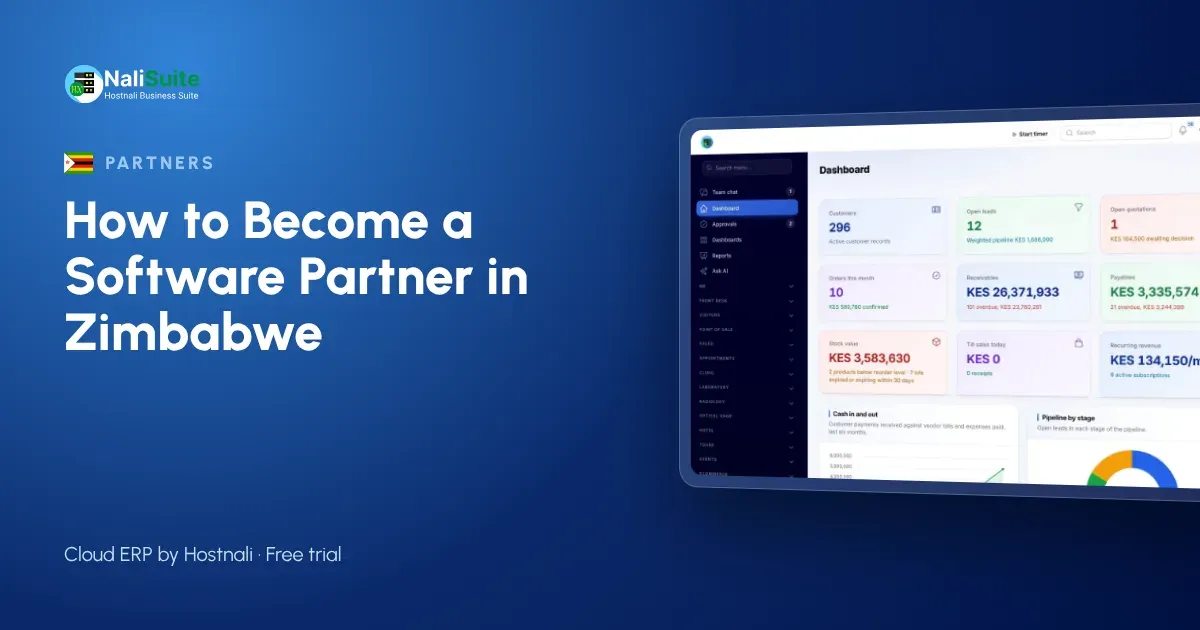
Zimbabwean businesses have learned to be careful with every dollar they spend, and software is no exception. That is why so many owners in Harare and Bulawayo ask their accountant or IT person before they commit to a system. If you are that adviser, a partnership lets you recommend with confidence and share in the subscription.
Let us clear up a few misconceptions first, then look at how the NaliSuite partner programme works in practice.
Five myths about becoming a software partner
“You need to be a software company.” You do not. The programme is for accountants, bookkeepers, consultants, IT companies and web agencies. NaliSuite is cloud software, so there are no servers to install.
“It is a one-off referral fee.” Not here. Partners earn 20% recurring commission on the subscriptions they bring in, every billing period, for as long as the client stays.
“Clients will blame you for every problem.” Clients can use NaliSuite’s own help centre for routine questions. You decide how much support you take on, and you can charge for it.
“It only suits big firms.” A sole practitioner with ten clients can partner just as well as a firm with a hundred.
“Setting clients up takes months.” Most small businesses can start with invoicing, payments and the books in days, then add stock and payroll later.
What the programme gives you
- A product with 17 built-in apps on every plan, from $2.10 a month, priced in US dollars on this site.
- The 20% recurring commission on clients you bring in.
- A partner account and materials when you are accepted.
- One platform for all your clients, so you only have to learn one system.
The full terms are on nalisuite.com/partners. Read more on the partner programme page.
A simple service plan for each client
Before go-live
- Learn how the client sells, buys, pays staff and gets paid.
- Choose a plan based on the number of users and storage.
- Agree a start date, normally the first day of a month.
Setup
- Create the company and record the client’s BP number and VAT details.
- Add products, customers, suppliers and opening balances.
- Connect online payments through the client’s own payment provider.
- Set up invoicing templates with the client’s branding.
After go-live
- Train the owner and staff in short sessions.
- Check in after two weeks and after a month.
- Review the books each quarter and suggest the next app, for example inventory or projects.
Explaining the value to a cost-conscious owner
Zimbabwean owners want to know what they get for every dollar. Avoid talking about features and talk about the hours and mistakes that disappear:
- No more retyping. A quotation becomes an order and an invoice without being typed again, and payments post to the books.
- Fewer stock surprises. Stock moves with every sale, purchase and transfer, so a count at the end of the month is a check, not a shock.
- Faster month end. When the accountant can log in and see the transactions, the books close sooner and cost less to prepare.
- One subscription instead of several. Invoicing, stock, CRM, payroll and projects are all on the same plan, so the owner is not paying for five tools.
Then let them try it. Every plan starts with a free trial, and clients can change plans or cancel at any time, which removes most of the risk from the decision. Offer to set up the trial with their own products and a few real customers so they judge it on their own business, not a demo.
Zimbabwe-specific points
Tax. Set VAT in the country pack and confirm the current rate and rules with ZIMRA; NaliSuite lets the business enter and update its own rates.
Payroll. NaliSuite does not claim a statutory payroll pack for Zimbabwe. Set up the client’s own deductions in payroll together with their accountant and check a test month first.
Personal data. The Cyber and Data Protection Act [Chapter 12:07] applies to the personal data you handle, with POTRAZ as the data protection authority. Agree in writing what you may access as a partner.
Bank reconciliation. Many Zimbabwean businesses hold more than one bank account. Bank reconciliation helps keep each one matched to the books.
Choosing a niche
Partners grow fastest when they become known for one type of client. In Zimbabwe, good candidates include:
- Retailers and wholesalers in Harare and Bulawayo who need stock and till control.
- Lodges and tour operators around Victoria Falls.
- Schools and colleges that bill fees every term.
- Professional firms in Mutare or Gweru that bill time on projects.
The industries hub lists the add-ons that suit each sector, which helps you build a standard setup for your niche.
Frequently asked questions
Can a firm outside Harare become a partner?
Yes. NaliSuite runs in the cloud, so you can serve clients anywhere in Zimbabwe.
What do partners earn?
20% of the subscriptions they bring in, every billing period, for as long as the client stays.
Can I charge for setup and training?
Yes. Your own fees are agreed directly with your clients.
How do I join?
Apply on nalisuite.com/partners.
Try NaliSuite
Start a free trial of NaliSuite and set up a demo for the niche you want to serve. Show it at your next client meeting.