 USD
 KES - Kenya
 UGX - Uganda
 TZS - Tanzania
 RWF - Rwanda
 NGN - Nigeria
 ZAR - South Africa
 GHS - Ghana
 ETB - Ethiopia
 ZMW - Zambia
 USD - International

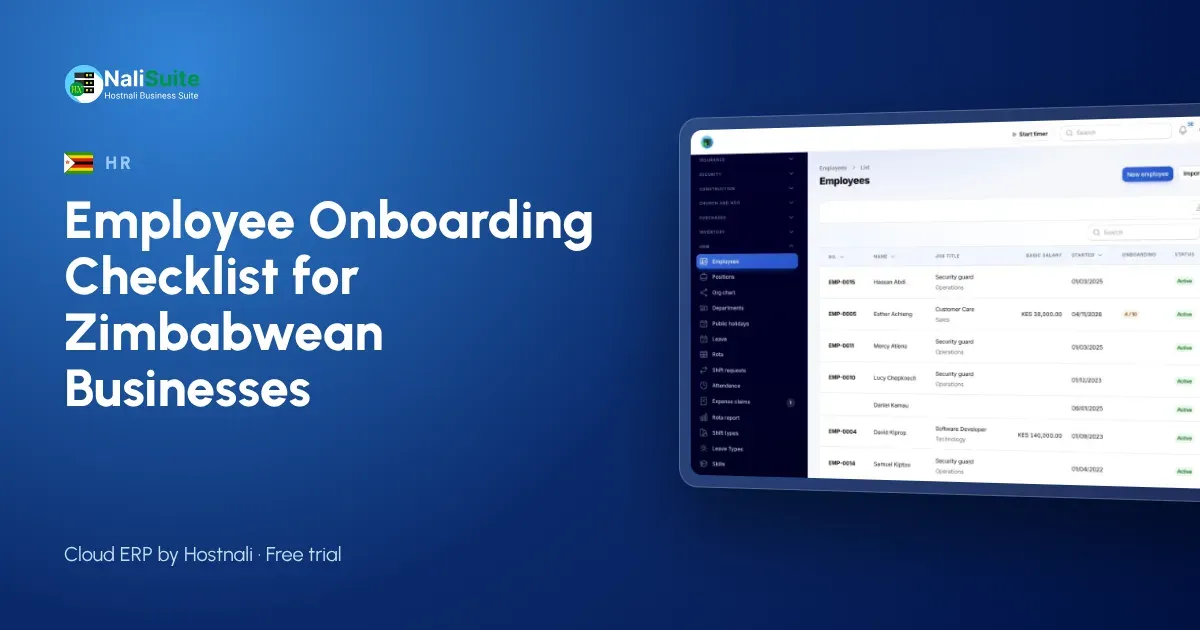
Owners in Zimbabwe ask us the same questions about bringing in new staff. How much paperwork is enough? Who should do the induction? How do I make sure the first salary is right when the pay rules keep changing?
This guide answers those questions one by one, then gives a short records list and an example from a hardware distributor in Bulawayo.
“What should happen before the person starts?”
More than most businesses do. The days between the signed offer and the first morning are the cheapest time to prepare. In that window:
- Get the contract signed and filed.
- Collect the details payroll needs (see the list below).
- Decide where the person will sit or work, and prepare tools, uniform and logins.
- Tell the team who is joining and when.
A new hire who arrives to a ready desk and a planned first week trusts the business from day one.
“Who should run the induction?”
The direct supervisor, not the owner and not “whoever is around”. The supervisor knows the job and will manage the person afterwards. In a small business the owner can do the welcome, but the supervisor should own the first week: tasks, feedback, introductions.
Pair the new hire with a buddy as well, an experienced colleague who answers the small everyday questions.
“How long should onboarding take?”
Think of it in three steps: the first day, the first week and the first three months. The first day is about people and rules. The first week is about learning the core tasks. The first three months end with the probation decision, which should be based on goals you agreed at about day 30 and wrote down.
“What records do I need?”
Before the first payday:
| Record | Why |
|---|---|
| Signed contract and job description | Terms and duties |
| National ID | Identity, and the name payroll must match |
| Tax details for ZIMRA | Employee tax |
| Bank account | Salary payment |
| Next of kin and emergency contact | Emergencies |
| Certificates and licences | Roles that depend on them |
Keep these on the employee’s record in the HR app, with scans in Documents.
“How do I get the first salary right when the rules change so often?”
NaliSuite does not include a statutory payroll pack for Zimbabwe. You set up your own earnings and deductions in the payroll settings: income tax, pension and any other contributions, with the rates your accountant confirms. When the rules change, you change the settings once and every payslip follows.
Before each first payroll for a new hire:
- Check current rules with ZIMRA and the relevant contribution bodies.
- Confirm the salary, allowances and currency agreed in the contract.
- Pro-rate the first month if they started part way through.
- Review the draft payslip before you approve the run.
The payroll app then produces payslips from the same records every month.
“How do staff get their payslips and request leave?”
On their phones. The employee app installs from the browser, with no app store needed. Through employee self-service, staff apply for leave, check in at geofenced locations, claim expenses with a photo of the receipt and download payslips. Managers approve from their own phones.
Example: a Bulawayo hardware distributor
A hardware distributor in Bulawayo with a warehouse, two shops and a delivery team hired six people in one month: two counter staff, a forklift driver, two delivery drivers and a bookkeeper. Previously, the owner’s assistant kept a ring binder per person, and a new driver once went three weeks without his licence copy on file.
Now each hire goes into the HR app on the day the contract is signed, and an onboarding checklist starts automatically. Tasks are split between the shop managers, the warehouse supervisor and the bookkeeper: contract, ID, licence, safety briefing, uniform and first payslip check. Drivers check in at the warehouse with their phones, so attendance is recorded before the first pay run.
Look after personal data
Zimbabwe’s Cyber and Data Protection Act [Chapter 12:07], with POTRAZ as the data protection authority, covers employee data. Collect what you need for the job and the law, keep it secure and restrict access. In NaliSuite, each user only sees what their role allows.
Explain the first payslip
When the first salary is paid, take a few minutes to go through the payslip with the new employee: what was paid, in which currency, and what each deduction is for. Staff who understand their payslip ask fewer questions later, and mistakes are caught in the first month instead of the fourth.
Frequently asked questions
Does NaliSuite work out Zimbabwean tax automatically?
There is no statutory pack for Zimbabwe. You set the deductions and rates in payroll settings, and NaliSuite applies them every pay run.
Can the onboarding checklist be different per department?
You decide what goes on it. Many businesses list the tasks for each department and write down who does each one, so the shop, warehouse and office managers all know their part.
What happens when someone leaves?
The HR app starts an offboarding checklist automatically, so equipment comes back and access is closed.
Try NaliSuite
Zimbabwean businesses can keep HR, onboarding, payroll and the staff app in one system, from $2.10 a month after a free trial. See the plans.