 USD
 KES - Kenya
 UGX - Uganda
 TZS - Tanzania
 RWF - Rwanda
 NGN - Nigeria
 ZAR - South Africa
 GHS - Ghana
 ETB - Ethiopia
 ZMW - Zambia
 USD - International

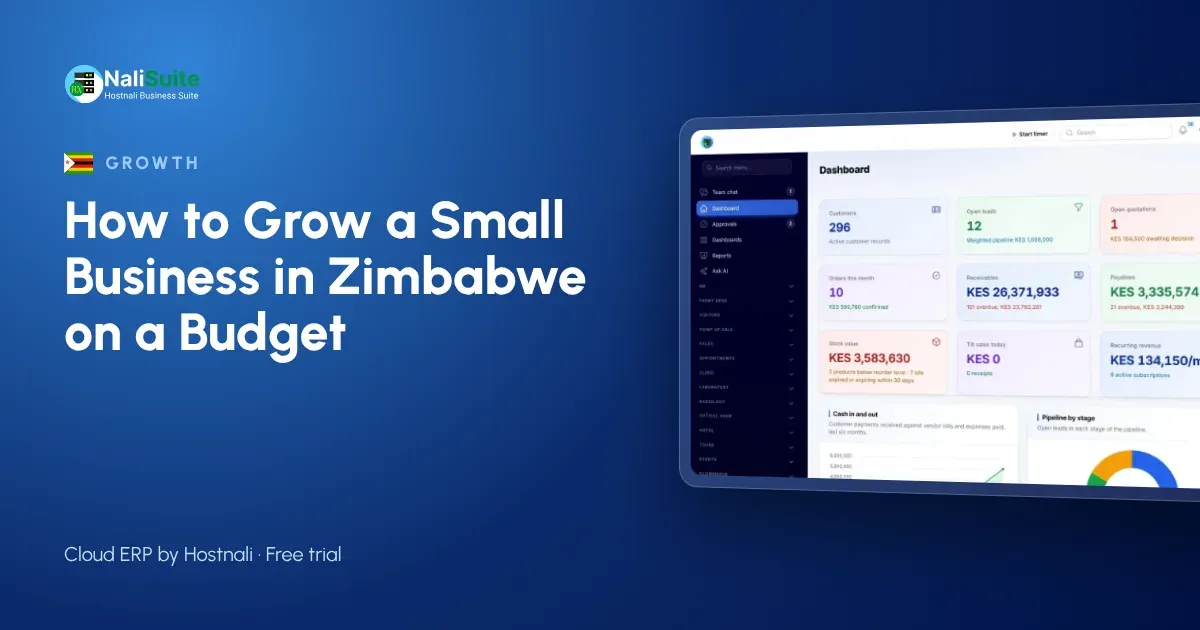
Zimbabwean entrepreneurs are some of the most resourceful on the continent. They have had to be. When cash is tight and conditions change quickly, big growth plans with big budgets are not realistic. What works is a series of small, cheap moves that compound.
This guide lists ten low-cost growth moves, explains when it makes sense to spend money, and covers the Zimbabwe-specific points to keep in mind.
Spend time before money
Before you buy anything, use what you already have: your existing customers, your reputation and your own knowledge of the market. Most of the moves below cost little more than a few hours a week.
Ten low-cost growth moves
Moves that bring customers back
1. Call your top customers. List the twenty who spent the most last year and speak to each one. Ask what they need next and whether anything frustrated them.
2. Remind people. Many customers would buy again if they remembered. A message when stock arrives or a service is due works well, as long as they agreed to receive it.
3. Bundle. Offer products that go together, such as a phone with a cover and screen protector, or a service with a maintenance visit.
Moves that bring new customers
4. Ask for referrals. Satisfied customers in Harare and Bulawayo talk to each other. Ask them directly and thank them when someone comes through.
5. Be findable. A simple website and an up-to-date Google business profile help people find you. The AI website builder is a low-cost way to start.
6. Partner locally. A hardware shop and a plumber, or a caterer and an events venue, can recommend each other at no cost.
Moves that protect money
7. Invoice on the day. The sooner a customer gets an invoice, the sooner they pay. Make it easy with online payments through your own payment provider.
8. Chase every week. Keep a list of who owes what and follow up the oldest first.
9. Know your margins. Work out what each product really costs you in US dollars, including transport and fees, and stop selling anything that does not make money.
A move that saves time
10. Write down your processes. How to take an order, how to receive stock, how to close the till. Written steps let you hand work to staff and stop being the bottleneck. Start with the one task you are asked about most often, and keep the steps short enough to fit on one page.
When to invest
Spending makes sense when a cheap move has proved itself and you need to do more of it. Signs you are ready:
- Referrals and repeat sales are steady, and you need a better way to track customers. A CRM helps.
- You are losing track of stock across a shop and a store. Inventory shows quantities in each location.
- Your accountant spends days sorting your records. Accounting that posts from invoices and payments saves those days.
- You are hiring and need payroll done properly.
When you invest, choose tools you can start small with and grow into. NaliSuite plans start from $2.10 a month, with all 17 apps on every plan and a free trial.
Zimbabwe-specific points
Pricing in US dollars. Review prices regularly, especially when supplier costs move. Make sure every quote states the currency clearly.
Tax. Keep your BP number and VAT details on invoices where required, and confirm current rates and rules with ZIMRA.
Customer data. When you collect phone numbers and emails for marketing, the Cyber and Data Protection Act [Chapter 12:07] applies. Only message people who agreed, and keep their details secure.
Payroll. NaliSuite does not claim a statutory payroll pack for Zimbabwe, so set up your own deductions in payroll with your accountant.
An example from Bulawayo
A small printing business had steady walk-in trade but no growth. The owner tried three cheap moves over two months: calling the twenty largest past customers, partnering with a nearby school-uniform supplier for referrals, and invoicing on the day with a payment link.
The calls turned up two schools that needed exam printing every term. The partnership brought a handful of new orders. Invoicing on the day meant those orders were paid faster. None of it cost much, and it gave the owner the confidence and cash to invest in a second printer.
Keep score
Every month, write down four numbers: sales, money owed to you, new customers and where they came from. You do not need complicated reports to see whether your moves are working. Over a few months, these numbers show which moves to repeat and which to drop.
Frequently asked questions
How can I grow a business in Zimbabwe with little capital?
Start with moves that cost time rather than money: calling past customers, asking for referrals, invoicing on the day and chasing payments weekly.
Should I price in US dollars?
Many Zimbabwean businesses do. Whatever currency you use, state it clearly on every quote and invoice.
When should I start using business software?
When stock, staff or customer numbers make notebooks and spreadsheets slow. A free trial lets you test it first.
Does NaliSuite suit my type of business?
See the industries hub for the sectors it covers.
Try NaliSuite
Pick three moves from the list, try them this month, and start a free trial of NaliSuite when you are ready to put systems behind them.