 USD
 KES - Kenya
 UGX - Uganda
 TZS - Tanzania
 RWF - Rwanda
 NGN - Nigeria
 ZAR - South Africa
 GHS - Ghana
 ETB - Ethiopia
 ZMW - Zambia
 USD - International

Zimbabwean businesses have learnt to be careful with stock: supply can be unpredictable, many goods are imported, and every dollar tied up on a shelf is a dollar you cannot use elsewhere. These tips help shops, wholesalers and pharmacies keep inventory accurate and cash moving.
Set reorder points for your best sellers
Most stock-outs happen because nobody noticed a line running low until a customer asked for it. Fix that with reorder points: average daily sales times the supplier’s lead time, plus a buffer for delays. Sell 4 units a day with a 7-day lead time? Reorder at around 35.
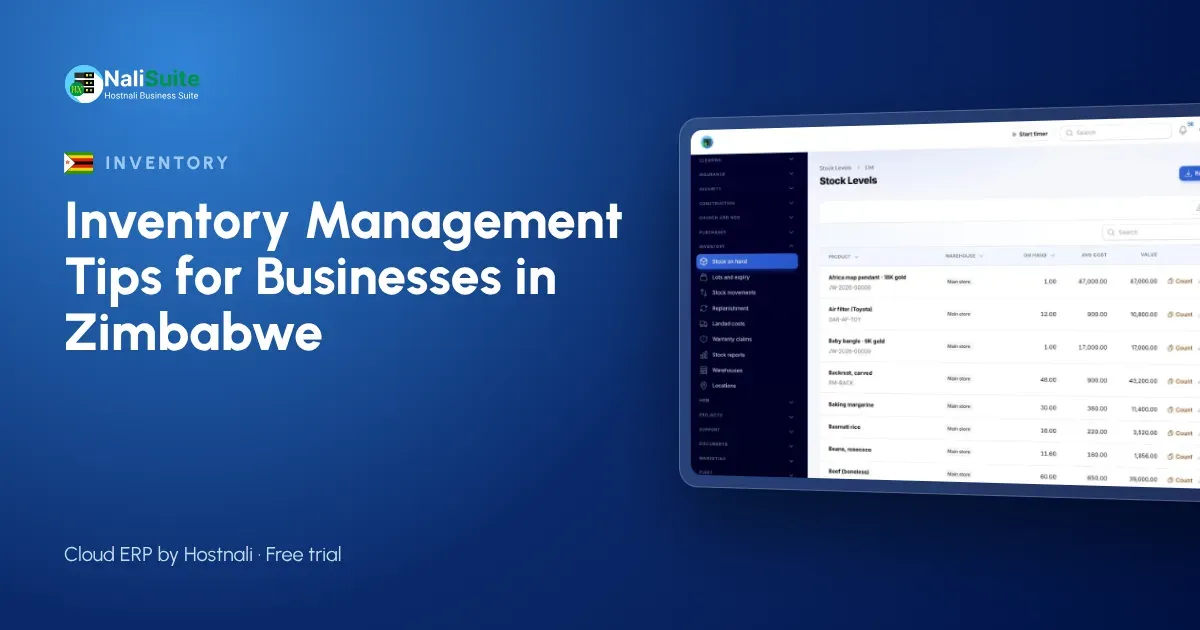
In NaliSuite, inventory can apply reorder rules for you and list what is below its level each day, ready to turn into a purchase order.
Stock pressures in Zimbabwe
Many goods come in from South Africa, so lead times depend on border crossings and transport. Businesses in Harare often supply branches or customers in Bulawayo, Mutare or Gweru.
Price changes and mixed payment methods make it important to know your real cost per item. Pharmacies and food businesses must track batches and expiry dates. Without a system, stock counts and cash-ups rarely agree.
Several shops or warehouses
Running two shops from one stock list is how goods go missing. Instead, treat each shop, warehouse or even a delivery van as a separate location. Transfers between them are recorded like any other movement, and each branch’s reports show its own stock and sales.
Head office still sees the total, so purchasing decisions are based on the whole business.
Example: a wholesaler in Harare
A grocery wholesaler in Harare imports some lines and buys others locally. Imported lines have higher reorder points to cover the time it takes to bring stock in; local lines are reordered more often in smaller quantities. Every delivery is received against a purchase order, and shortages are recorded before the supplier is paid.
A monthly report of slow-moving stock helps the owner stop reordering lines that no longer sell.
Know what is not selling
Stock that does not sell is cash you cannot use. Run a report of items with no sales in the last 60 or 90 days and decide what to do with each: discount, bundle with a fast seller, return to the supplier or stop reordering.
Do the same with overstock: lines where you hold months of sales. Ordering less, more often, keeps cash available for what actually sells.
Mistakes Zimbabwean businesses can avoid
- Old cost prices. Update cost prices with every delivery so margins are real.
- No allowance for border delays. Imported lines need higher reorder points.
- Cash-ups without stock checks. If the till and stock are separate, a shortage in one never shows in the other.
- Expired stock on the books. Write it off promptly so your stock value is honest.
Count your stock properly, once
Everything else depends on knowing what you have today. Pick a quiet day, count every item once, and enter the figures as your opening stock. Use barcodes where you can: a phone camera or a cheap USB scanner is faster and more accurate than writing on paper.
After that first full count, switch to cycle counting: count a different section each week, starting with fast movers and high-value items. Small, regular counts catch errors early and never close the shop.
Getting started in Zimbabwe
Import your product list with cost price, selling price and barcode, and count once to set opening stock.
Set reorder points that allow for import lead times and border delays. Use purchase orders and check deliveries against them before paying. Record batches and expiry dates for food and medicines.
For branches in other towns, give each its own stock location and record transfers. Review slow movers monthly and free up cash for lines that sell.
Frequently asked questions
How do I spot dead stock?
Run a report of items with no sales in the last 60 or 90 days. Discount, bundle or return them, and stop reordering lines that no longer sell.
What is a reorder point?
The stock level at which you place a new order: average daily sales multiplied by the supplier’s lead time, plus a safety buffer.
Can I import my existing stock list?
Yes. Import products, prices and opening stock from Excel or CSV.
Try NaliSuite
Every NaliSuite plan, from $2.10 a month, includes inventory, purchases and an offline till, so stock and sales are always in one place. Try it free.