 USD
 KES - Kenya
 UGX - Uganda
 TZS - Tanzania
 RWF - Rwanda
 NGN - Nigeria
 ZAR - South Africa
 GHS - Ghana
 ETB - Ethiopia
 ZMW - Zambia
 USD - International

Zimbabwean contractors and service firms are used to working with tight margins and clients who pay in stages. In that environment, a badly run project is not just stressful; it can turn a profitable contract into a loss. Most of the damage comes from a handful of avoidable mistakes.
We will go through five of them using a borehole drilling contractor in Bulawayo as the example, and show the fix for each.
The example business
A drilling and pump installation company in Belmont, Bulawayo, has two rigs, two crews and an office of three. Its jobs range from household boreholes in the suburbs to irrigation boreholes for farms near Gwanda and water points for a school in Matobo. Each job involves a site survey, drilling, casing, pump installation, testing and handover.
Mistake 1: the plan lives in the owner’s head
When the owner is on a site two hours away, the office cannot answer a client’s simple question: when is the rig coming?
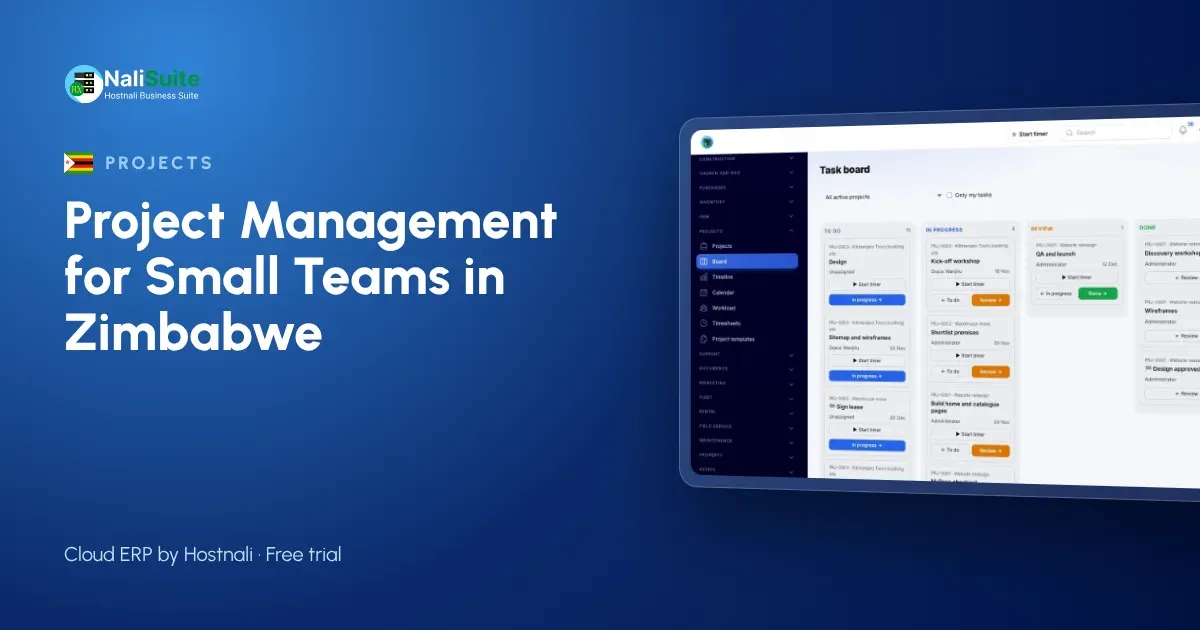
The fix: put every job in NaliSuite Projects with its tasks, owners and due dates. A template for a standard borehole job means each new contract starts with survey, permits check, drilling, casing, pump installation, water test and handover already listed. The office can answer the client in seconds.
Mistake 2: rigs and crews double-booked
With two rigs and a dozen jobs, it is easy to promise the same week to two farmers.
The fix: use the timeline and calendar views to see which crew and rig is on which job each day. The workload view shows who is overbooked. When a job runs long because the ground is harder than expected, move the following jobs on the timeline and tell those clients early.
Mistake 3: extra work done for free
The client asks for the borehole to go deeper, or for an extra tank stand. The crew does it, and nobody writes it down.
The fix: staff log time on the job’s tasks with a timer or timesheet, and the office approves it weekly. Extra work becomes its own task. Approved time can be invoiced at your rates, so the deeper hole is paid for.
Mistake 4: invoices sent late, payments chased later
Stage payments only help cash flow if each invoice goes out the day the stage is finished.
The fix: set the billing as milestones, for example a deposit before mobilisation, a payment after drilling and casing, and the balance after pump installation and testing. Send each one from NaliSuite Invoicing as soon as the stage is done. Clients can pay through online payments using the methods your payment provider supports, or by bank transfer, and each payment is recorded against its invoice.
Invoices are in USD, as is common for contracts in Zimbabwe, and the client sees the full history in the customer portal.
Mistake 5: equipment breaks in the middle of a job
A rig breakdown halfway through a contract stops the job and delays every job after it.
The fix: look after the equipment as carefully as the projects. The Asset Maintenance add-on keeps an equipment register with preventive maintenance plans and work orders, so services happen between jobs rather than as emergencies on site.
Bringing it together
With these fixes in place, the Bulawayo contractor runs a short meeting every Monday:
- Which jobs are late or waiting for the client?
- Where are the rigs and crews this week and next?
- Which invoices are due to go out?
- Is any equipment due for a service?
All four answers come from the same system, so the meeting takes twenty minutes.
Knowing which jobs pay
Profitability compares what you billed with the cost of the time logged. After a season, the contractor saw that farm boreholes far from Bulawayo took much more crew time than suburban jobs, mostly in travel and set-up, and added a distance charge to its quotes.
Clients and records
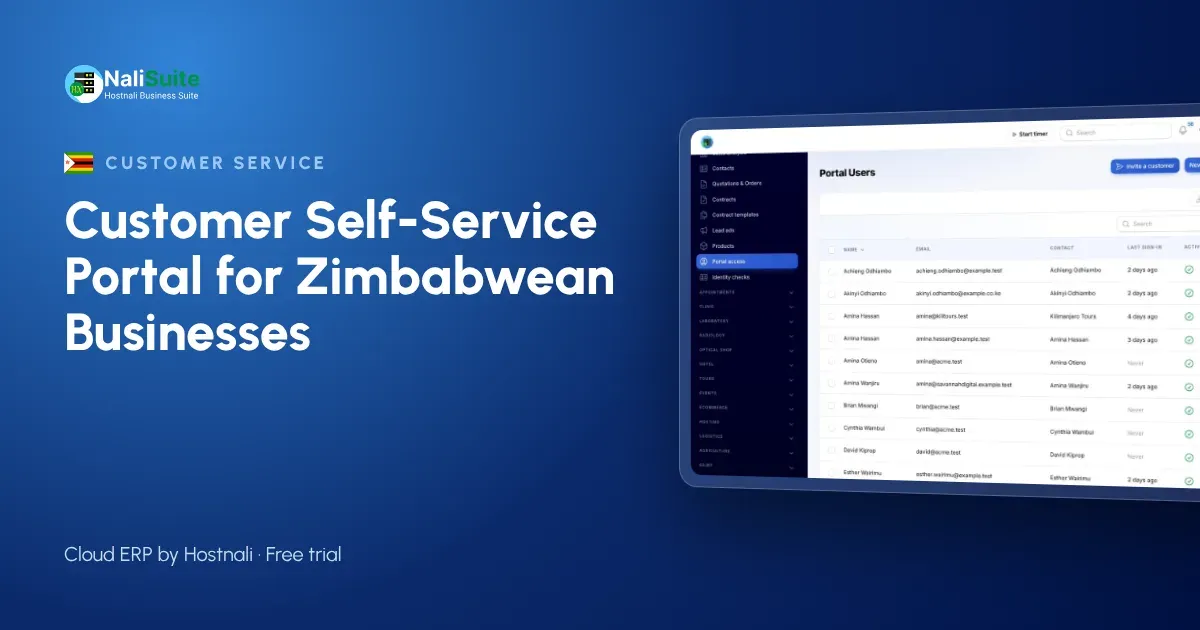
Clients can follow progress, download the water test results and pay invoices in the customer portal. Signed contracts and completion certificates can be stored and signed online in NaliSuite Documents.
Client and staff details are personal information under the Cyber and Data Protection Act [Chapter 12:07], with POTRAZ as the data protection authority, so keep them in the system and give access only to the people who need it.
Planning around distance
Many Zimbabwean contracts are a long drive from the office, and an extra trip for a forgotten part eats into the margin quickly. Add travel days and a loading checklist to the template, so the crew leaves Bulawayo with everything the job needs. The timeline then shows realistic dates, and clients in outlying areas get honest start dates from the beginning.
Frequently asked questions
Can crews update the job from site?
Yes, wherever they have a connection. NaliSuite runs in the phone browser, so tasks and hours can be updated on site or at the end of the day.
Can we bill in USD?
Yes. Invoices are raised in your business currency, so a Zimbabwean business can invoice in USD.
Is this only for drilling companies?
No. Builders, electricians, solar installers and any business that runs jobs in stages can use the same approach.
Try NaliSuite
Every NaliSuite plan includes Projects, Invoicing, Documents and the customer portal, from $2.10 a month. Look at the plans and start a free trial with your next contract.