 USD
 KES - Kenya
 UGX - Uganda
 TZS - Tanzania
 RWF - Rwanda
 NGN - Nigeria
 ZAR - South Africa
 GHS - Ghana
 ETB - Ethiopia
 ZMW - Zambia
 USD - International

Zimbabwe’s restaurants serve sadza and stews in Harare, steaks in Bulawayo and tourists at Victoria Falls. With prices mostly in US dollars and frequent power cuts, tight cost control and a reliable till are essential.
Know your plate cost
Food cost is the number that decides whether a busy restaurant actually makes money. To know it, you need recipes: how much of each ingredient goes into each dish. Once recipes are written down, the plate cost follows from your purchase prices.
NaliSuite’s Restaurant Pro add-on holds those recipes, shows the plate cost and food-cost percentage for every dish, and groups the menu into stars, plowhorses, puzzles and dogs. A dish that sells well but costs too much to make shows up straight away, which is the moment to adjust the price or the portion.
Tables, bookings and the kitchen
Orders should go from the table to the kitchen without being rewritten. Taking orders on the till at the table, or right after, keeps the kitchen and the bill in step: what the kitchen cooks is what the customer pays for.
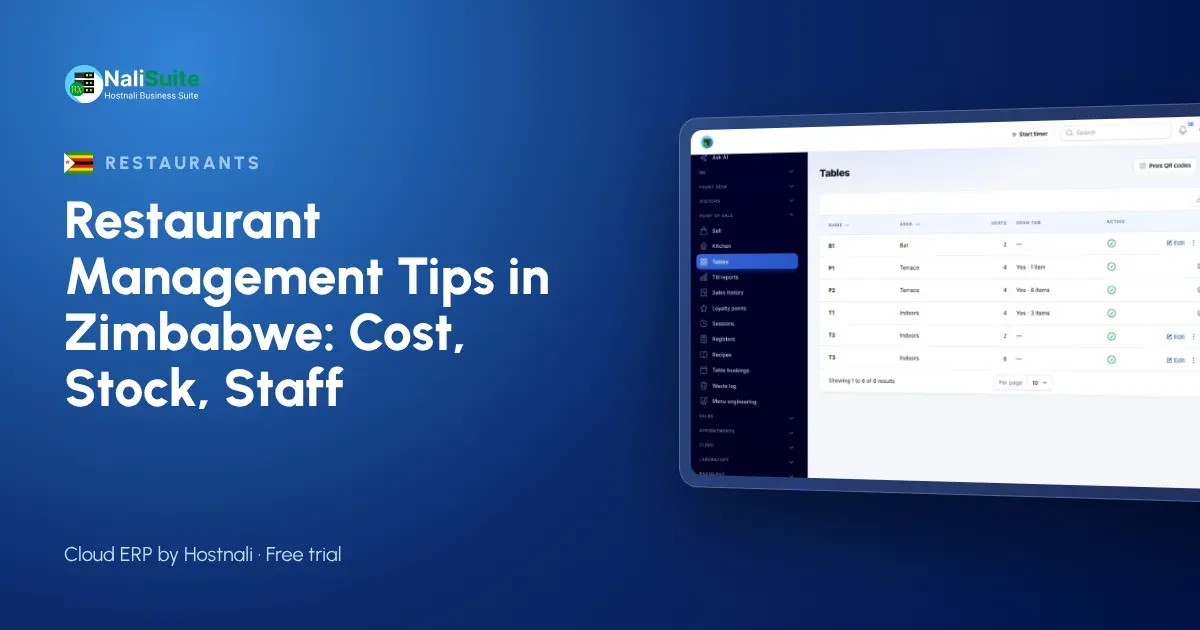
Point of Sale has restaurant tables built in, so a waiter opens a table, adds dishes through the meal and takes payment at the end, split across payment methods if the guests want. Restaurant Pro adds table bookings, so you know before service how many covers to prepare for.
Example: a family restaurant in Harare
A family restaurant in Avondale serves sadza with beef, chicken and greens, plus a weekend braai. The owner noticed that meat costs were rising faster than sales, and suspected portions.
Recipes with portion weights now take meat out of stock with every plate sold. A weekly count against expected stock confirmed that weekend braai portions were well above the recipe. Training the grill staff and weighing portions on busy days brought food cost back down.
Let sales take ingredients out of stock
Counting the store room every night is slow, and counting it once a month means you discover losses too late. When recipes are linked to dishes, every sale takes its ingredients out of stock automatically, so the system knows roughly what should be on the shelf.
Compare that with a weekly count in Inventory and the gap tells you about waste, over-portioning or theft. Restaurant Pro has a waste log, so food thrown away is recorded with a reason instead of disappearing into the numbers. Reorder from suppliers with Purchases when stock drops to the level you set.
Zimbabwean details
Customers pay by cash, card and bank transfer, often in US dollars, so make sure each payment is recorded on the bill in the right currency. Power cuts are frequent: an offline till keeps selling and syncs later.
For VAT and fiscalisation requirements on your receipts, check with ZIMRA or your accountant. If you cater events or supply other outlets, the Food production add-on costs quotes per head and manages deliveries.
Keep selling when the network drops
A restaurant cannot tell hungry customers to wait for the internet. Use a till that works offline and uploads sales safely later: that is how NaliSuite’s offline POS behaves, and it runs in the browser on the devices you already own.
Let customers pay by cash or card or bank transfer, and record each payment on the sale. At closing, the till’s takings can be checked against the cash and payments received. The payments feature explains how the money is matched.
Getting started without disrupting service
Start with the till and your menu in the first week, so every sale is recorded. Add recipes for your ten best-selling dishes next and look at their plate costs. Then switch purchasing to purchase orders and begin a weekly stock count. Within a month you will know your food cost, your waste and your best dishes, without closing for a single day.
Your team is part of the system
A restaurant with good food and poor shift planning still loses money. Track attendance and leave in HR, where staff check in from their phones, and let Payroll work out pay from the hours actually worked.
On the till, give each staff member their own login rather than one shared password. End-of-shift questions are then answered with facts, and your best people get the credit they deserve.
Frequently asked questions
Can I run the restaurant in US dollars?
Yes. Prices, bills and costs can be in US dollars.
What happens during a power cut?
The till keeps selling offline and syncs every sale when the connection returns.
How often should I count stock?
Count your most expensive ingredients weekly and the full store room monthly. Because sales already deduct ingredients, a count shows you the gap straight away.
Try NaliSuite
Try it for a week alongside your current till: write recipes for your five best sellers and compare the plate costs with your prices. NaliSuite plans start at $2.10 a month; see the plans and how it works for restaurants and cafés.