 USD
 KES - Kenya
 UGX - Uganda
 TZS - Tanzania
 RWF - Rwanda
 NGN - Nigeria
 ZAR - South Africa
 GHS - Ghana
 ETB - Ethiopia
 ZMW - Zambia
 USD - International

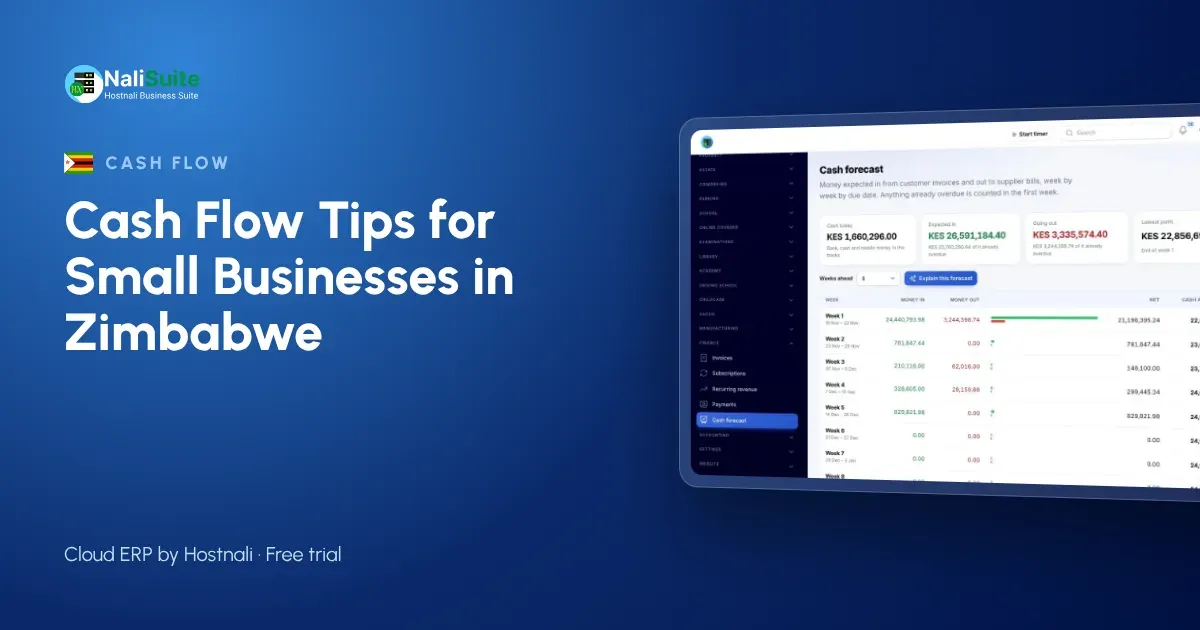
In Zimbabwe, cash flow planning has an extra layer: currency. A business in Mutare may price in US dollars, pay some costs in local currency and hold balances in both. Good cash flow management here means watching timing and currency at the same time.
Decide your pricing currency clearly
State on every quotation and invoice which currency the price is in and which currencies you accept. Ambiguity leads to disputes and short payments.
Match currencies where you can
If your main costs are in US dollars, try to earn in US dollars too. Where you receive local currency, convert or spend it promptly according to your own policy, rather than letting balances sit.
Invoice fast and make paying easy
Send invoices on delivery with the due date and your BP number. Card and bank payment links through your online payment provider help customers pay without delay.
Keep stock lean
Stock bought in one currency and sold in another adds risk. Reorder in smaller amounts and track movement in NaliSuite Inventory.
Set aside ZIMRA money
Keep VAT and payroll taxes collected for ZIMRA in a separate account, in the currency they must be paid in. Check current requirements with ZIMRA.
Reconcile each account
Reconcile each currency account weekly so balances and debtors are accurate. Our guide to reconciling payments in Zimbabwe covers multi-currency accounts.
Example: a Mutare hardware store
A hardware store in Mutare priced in US dollars but received a mix of currencies. It set clear rules: prices in USD, a published rate for local-currency payments updated regularly, and local-currency takings used for local costs within the week. The store stopped losing value on balances it was holding and could plan purchases with confidence.
A second example: a Bulawayo printing business
A printing business in Bulawayo bought paper and ink in US dollars but often received local currency from smaller clients. It now asks for deposits in US dollars on large print jobs, prices local-currency payments at a clearly published rate, and buys supplies in smaller batches more often. Cash is held in the currency it is needed in, and fewer jobs are delayed waiting for supplies.
Mistakes to avoid in Zimbabwe
- Pricing without stating the currency.
- Holding local-currency balances longer than necessary.
- Large stock purchases in one currency against sales in another.
- Spending ZIMRA money collected as VAT or payroll taxes.
- No weekly review of balances in each currency.
A weekly routine for multi-currency cash
Every Monday, write down the balance in each currency account, the invoices due in each currency this week and next, and the bills you must pay in each currency. If a currency is short, decide now whether to convert, chase a customer or delay a purchase. Keep the routine to fifteen minutes; the aim is to spot shortfalls a week early, not to produce a perfect report. Over a few months, the routine also shows which customers reliably pay in the currency you need.
How NaliSuite helps
Accounting keeps balances per currency account, Invoicing issues invoices in the currency agreed with each customer and sends reminders, and Purchases shows supplier bills due, so the weekly routine starts with the figures already in front of you.
Frequently asked questions
Can I invoice in more than one currency?
Yes. NaliSuite Accounting supports invoices and accounts in more than one currency.
How do I handle exchange differences?
Record the payment at the rate applied and post the difference as an exchange gain or loss.
What should I review weekly?
Cash in each currency, overdue invoices and bills due in the next fortnight.
Should deposits be in the same currency as my costs?
Where possible, yes. It reduces the risk of currency changes between taking the order and buying supplies.
How often should I review prices?
Regularly, especially when your costs or exchange rates move, so margins stay intact.
Should I keep a reserve in each currency?
If you have costs in both currencies, a small reserve in each avoids forced conversions at a bad moment.
How do I record a customer who pays in a different currency than invoiced?
Record the payment at the rate applied against the invoice and post any difference as an exchange gain or loss.
What should I tell customers about currencies?
State clearly on quotations and invoices which currency the price is in and which currencies you accept, at what rate.
How often should I update my published exchange rate?
Regularly enough that it reflects what you can actually achieve when converting, and always date it.
What is the quickest win for a small Zimbabwean business?
For most, it is invoicing on the day of delivery with the currency and payment details stated clearly. It costs nothing, shortens the wait for payment and avoids disputes about how much was owed and in which currency.
Try NaliSuite
NaliSuite starts from $2.10 a month. See the plans.